
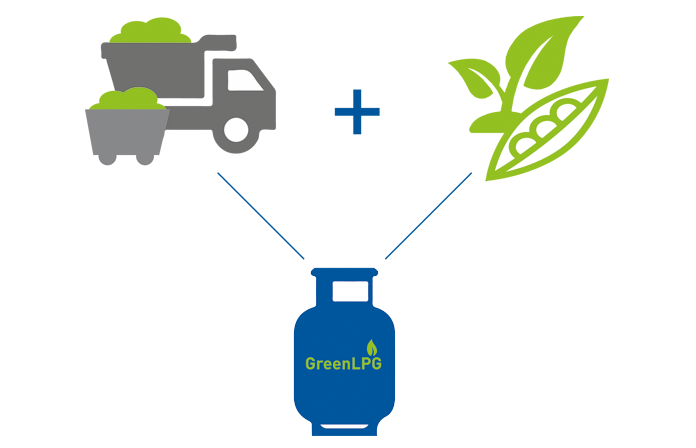
What is GreenLPG?
GreenLPG is a biogenic liquefied petroleum gas produced from biomass such as biowaste and renewable raw materials. Its properties are identical to those of conventional liquefied petroleum gas (propane, LPG) and it can therefore be used in exactly the same way. The sustainability of the biomass used in production is tested and certified by an independent and recognized certification body. Among other things, a standardized procedure is used to assess greenhouse gas reduction.
Further information on the Building Energy Act 2024 and GreenLPG can also be found in our brochure.
GreenLPG in the Building Energy Act
First things first: the Building Energy Act does not mean a ban on gas heating systems!
The Building Energy Act (in force since November 1, 2020) regulates requirements for heating systems in new buildings and thus replaces other legislation (EnEG, EnEV, EEWärmeG). The new version has been in force since January 1, 2024.
Key changes:
• Under the GEG, BioLPG is classified as gaseous biomass and renewable energy. This means that our GreenLPG complies with renewable energy guidelines
• Mass balancing has been made mandatory
Further information on this topic can be found on the website of the Federal Ministry of Housing, Urban Development, and Construction.
Would you like to find out which heating solution is best for you? The Heating Navigator can help you with this.
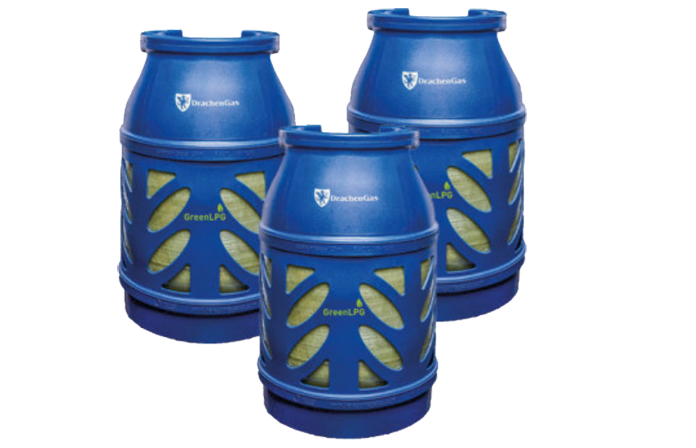
GreenLPG in cylinders
The use of GreenLPG significantly reduces emissions of climate-damaging greenhouse gases. By using GreenLPG, consumers are contributing to climate protection. The comparatively lightweight bottles made of fiber composite materials are easy to handle, for example when barbecuing or camping.
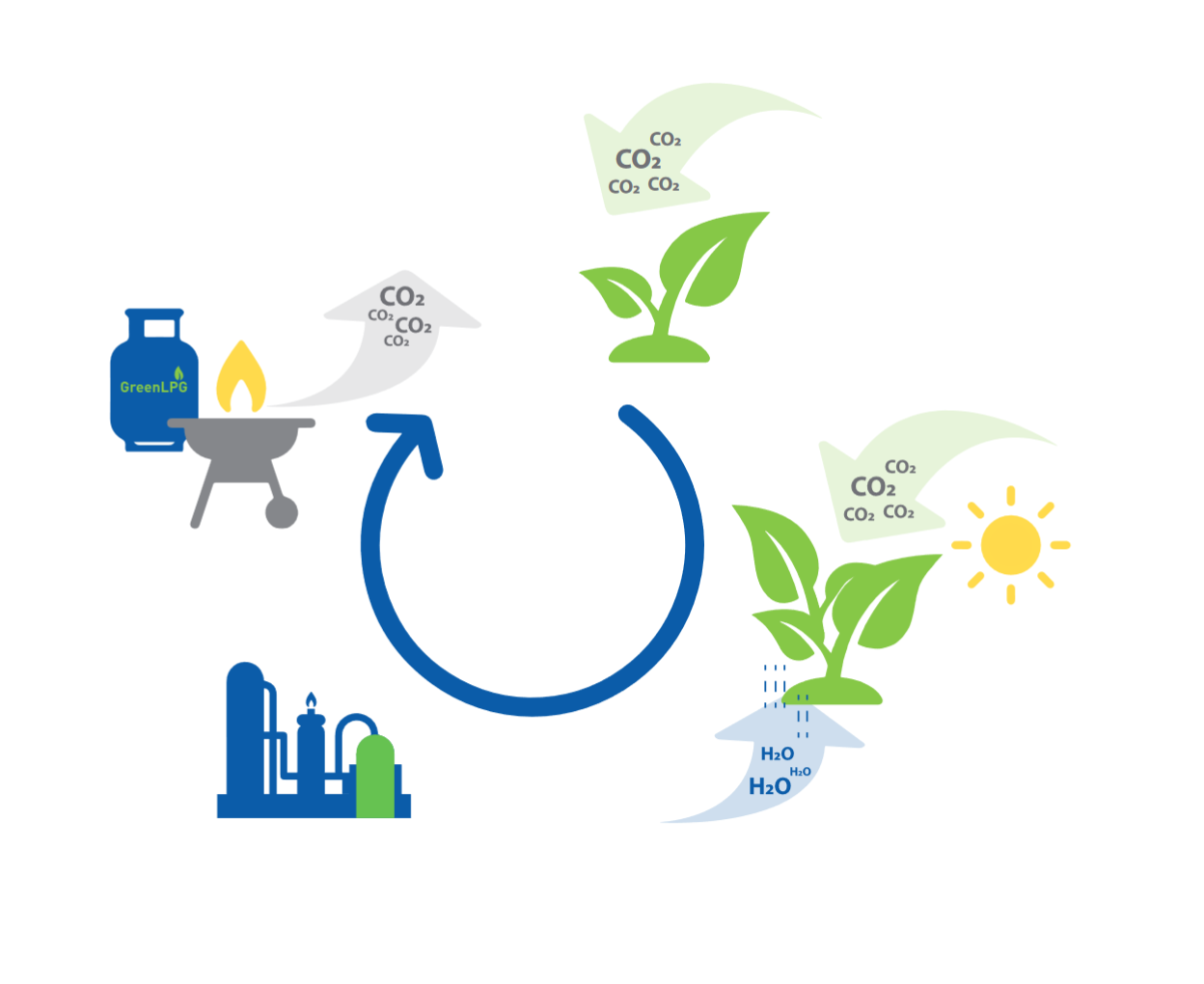
Climate-friendly liquefied petroleum gas
Compared to conventional liquefied petroleum gas, GreenLPG reduces greenhouse gas emissions by up to 80%. This is due to the biomass used in the production of GreenLPG. The biomass required is supplied by crops, waste, and residual materials. Throughout their life cycle, plants absorb as much carbon dioxide (CO2) from the atmosphere through photosynthesis as is released when GreenLPG is burned. Using waste and residual materials in the production of GreenLPG eliminates the need for disposal, which can be costly, and reduces greenhouse gas emissions. The greenhouse gas emissions generated during the production and transport of GreenLPG are comparable to those of conventional LPG.
Evidence management
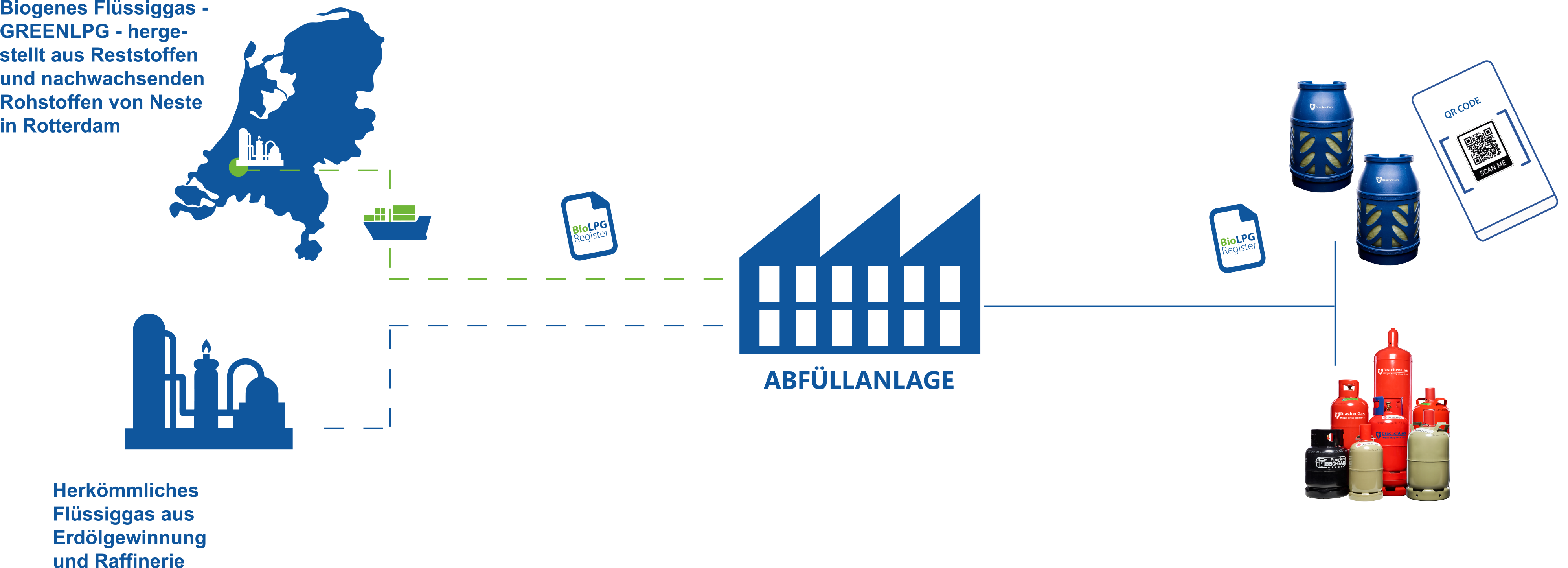
GreenLPG is produced in a refinery in Rotterdam and transported to Germany by ship or tanker truck in the same way as conventional liquefied petroleum gas. Since GreenLPG has the same chemical properties as conventional LPG, the two liquefied gases can be mixed together. This simplifies logistics and also saves CO2. As with green electricity, an independent register ensures that only as much GreenLPG can be sold as has been produced. The origin and quantity of GreenLPG is checked and registered via the BioLPG register of Green Navigation GmbH. For every GreenLPG cylinder sold, the exact amount with which the cylinder was filled is deducted from the register. This ensures that the biogenic liquefied gas was verifiably produced for every GreenLPG cylinder filled.

Mass balance
A mass balance system ensures that GreenLPG production volumes are allocated to the respective consumption volumes, thereby distinguishing between conventional and biogenic liquefied petroleum gas. Independent verification is carried out by Green Navigation.
This ensures seamless traceability of GreenLPG from use to production. DrachenGas customers receive independent verification of the biogenic properties of the product delivered.
Basic principles of mass balancing
Objective: Reliable and complete traceability of GreenLPG from use to production.
Input-output principle: The quantities removed from the system must not exceed the quantities added.
Independence: The mass balance system for GreenLPG must be independent. The operator may not balance or document its own
quantities and therefore always acts independently.
Prohibition of double marketing: Mass balancing ensures that GreenLPG is not marketed twice or multiple times
.